
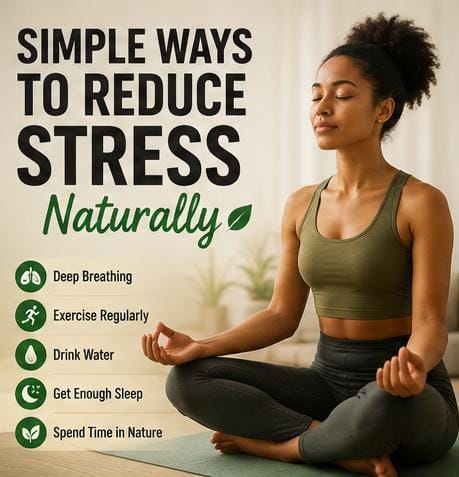
Simple Ways to Reduce Stress Naturally
Stress is something almost everyone experiences at some point in daily life. School responsibilities, intense work pressure, financial challenges, family obligations, and unexpected problems can quickly feel completely overwhelming. While experiencing short bursts of stress is a normal human response, carrying excessive, chronic stress over long periods can drain your physical energy, disrupt your sleep quality, impair your mood, and damage your long-term health.

The good news is that you do not need expensive therapy sessions, luxury spa retreats, or complicated medical routines to reclaim your peace of mind. There are many evidence-based, simple ways to reduce stress naturally that fit seamlessly into your everyday schedule. By exploring these simple ways to reduce stress naturally alongside simple morning habits that make your entire day easier and maintaining a regular workout routine, you can build a resilient, balanced lifestyle.
In this detailed guide, we explore 10 actionable, natural techniques to calm your nervous system, protect your emotional health, and boost your daily vitality.
Table of Contents
Why Managing Daily Stress Is Crucial for Health
When you encounter a perceived threat or high-pressure situation, your body activates its physiological “fight-or-flight” survival mechanism. This floods your system with hormones like adrenaline and cortisol, raising your heart rate and tightening muscle tension. While this biological design helped human ancestors escape physical danger, staying stuck in constant “high alert” mode due to modern bills, emails, and commute traffic erodes your vital organs over time.
Untreated chronic stress commonly causes noticeable side effects across your mind and body:
- Severe Sleep Disturbances: Insomnia, frequent night wakefulness, or waking up exhausted despite hours in bed.
- Persistent Muscle Tension: Frequent tension headaches, tight shoulders, backaches, and jaw clenching.
- Digestive Irritation: Stomach ulcers, bloating, slow digestion, and irritable bowel issues.
- Cognitive Decline: Brain fog, memory lapses, low concentration, and indecisiveness.
- Emotional Fragility: Short temper, sudden mood swings, anxiety spikes, and chronic exhaustion.
Proactively applying simple ways to reduce stress naturally counters these hormonal spikes, signaling to your brain that you are safe and allowing your body to repair itself.
10 Simple Ways to Reduce Stress Naturally
1. Prioritize Quality Restorative Sleep
Sleep deprivation and elevated stress feed into a dangerous cycle: poor sleep increases stress hormones, while high stress makes sleep nearly impossible. Consistently sleeping 7 to 9 hours per night gives your brain time to clear out metabolic waste, consolidate memories, and regulate emotional responses.
- Go to sleep and wake up at identical times every single day, including weekends.
- Turn off blue-light-emitting screens (phones, TVs, tablets) at least 60 minutes before bed.
- Keep your bedroom pitch dark, quiet, and reasonably cool.
- Avoid heavy, spicy meals or caffeine in the late afternoon and evening.
2. Spend Daily Time in Outdoor Environments
Stepping out into nature lowers blood pressure and significantly reduces circulating cortisol levels. Fresh air and natural scenery quiet the hyperactive default mode network in your brain, helping relieve repetitive overthinking. Finding simple ways to reduce stress naturally like taking a 15-minute walk around your neighborhood, sitting beneath a tree, or caring for balcony plants offers immediate calming benefits.
3. Engage in Regular Physical Exercise
Physical movement is arguably one of the most effective simple ways to reduce stress naturally. Exercise burns off accumulated stress hormones while triggering the release of endorphins—your brain’s natural mood-elevating chemicals.

You do not need exhausting weightlifting sessions or intense marathons to see mental health improvements. Light choices like brisk walking, gentle yoga, dancing, cycling, or home stretches effectively burn off nervous energy and improve sleep quality. Pair this movement with easy breakfast ideas for busy mornings for sustained energy throughout your day.
4. Take Planned Digital Detoxing Breaks
The constant surge of news updates, emails, and social media notifications keeps your nervous system in constant reactivity. Scrolling endlessly through curated lives often creates subconscious inadequacy and anxiety.
- Mute non-essential application notifications on your smartphone.
- Set “no-phone zones” during family meals and bedroom hours.
- Utilize software solutions like free apps that can help you stay organized to batch work tasks instead of checking devices constantly.
5. Practice Controlled Deep Breathing Exercises
When you get anxious, your breathing naturally becomes shallow and rapid, signaling an emergency state to your brain. Consciously slowing down your breathing is one of the most practical simple ways to reduce stress naturally, manually activating the parasympathetic nervous system (your body’s “rest and digest” switch).
6. Cultivate Supportive Social Connections
Human beings are wired for connection. Spending quality time with supportive family members, close friends, or community groups stimulates oxytocin release—a hormone that buffers against stress. Sharing your challenges with trusted people lightens mental burdens and restores emotional balance.
7. Build Organization and Time-Management Habits
Disorganization, chaotic schedules, and cluttered environments fuel feeling out of control. Breaking down large projects into bite-sized, manageable actions eliminates paralyzing overwhelm.

- Write down your top three tasks every evening for the upcoming day.
- Keep your primary work desk clean and free of unnecessary clutter.
- Say “no” firmly to non-essential commitments that overload your calendar.
8. Use Soothing Acoustic Environments & Music
Listening to slow-tempo instrumental tracks, classical tunes, or nature soundscapes (like rainfall or ocean waves) directly alters brainwave frequencies. Soothing audio lowers heart rates, drops blood pressure, and reduces muscle strain during intense work sessions.
9. Hydrate Consistently and Eat Whole Foods
Your gut and brain communicate constantly via the vagus nerve. Consuming heavily processed fast foods high in refined sugars causes rapid spikes and crashes in blood glucose levels, mimicking emotional panic attacks. Dehydration similarly causes fatigue and irritability.
- Drink plenty of fresh water consistently throughout your waking hours.
- Eat balanced meals rich in vegetables, lean proteins, nuts, and complex carbohydrates.
- Limit excessive alcohol and energy drink consumption.
10. Schedule Intentional Unstructured Rest Time
Modern culture often pressures people to maintain constant busyness, treating rest like laziness. However, deliberate, guilt-free downtime is essential for mental recovery and long-term sustainability. Set aside time each week for reading, creative hobbies, or learning about other simple ways to reduce stress naturally without feeling guilty.
How to Build a Personalized Stress Relief Routine
Trying to adopt all ten techniques at once can feel overwhelming. Instead, approach stress reduction as a gradual, step-by-step process.
- Phase 1 (Week 1): Focus purely on basic physical fundamentals—drink more water and set a consistent bedtime.
- Phase 2 (Week 2): Integrate light daily movement—take a 15-minute walk outside after lunch or work.
- Phase 3 (Week 3): Add mental boundaries—implement evening screen breaks and practice 4-7-8 breathing.
- Phase 4 (Week 4): Organize your daily tasks and protect your weekend rest hours.
Common Mistakes to Avoid When Managing Stress
- Relying on Temporary Coping Mechanisms: Binge-eating junk food, excessive alcohol use, or endless scrolling offer fleeting distraction while increasing bodily stress long-term.
- Ignoring Early Warning Signals: Overlooking persistent headaches, irritability, or jaw pain until complete physical burnout strikes.
- Expecting Overnight Elimination: Stress is an inherent part of living; the goal is building resilience and coping skills, not eliminating every challenge.
For additional health guidelines and wellness research, explore resources on the World Health Organization or verified clinical articles on Healthline.
Frequently Asked Questions (FAQ)
How fast can natural stress reduction techniques work?
Immediate strategies like deep breathing and taking a walk outside can calm your heart rate within 5 to 10 minutes. Long-term habits like better sleep and routine exercise yield noticeable baseline improvements within 2 to 3 weeks.
Can simple lifestyle changes completely replace medical therapy?
For daily environmental stress and mild anxiety, lifestyle changes are remarkably effective. However, if your stress stems from severe trauma or medical anxiety, these practices should complement care from a qualified healthcare professional.
What is the single best natural stress reducer?
While effectiveness varies by person, getting quality sleep and engaging in re